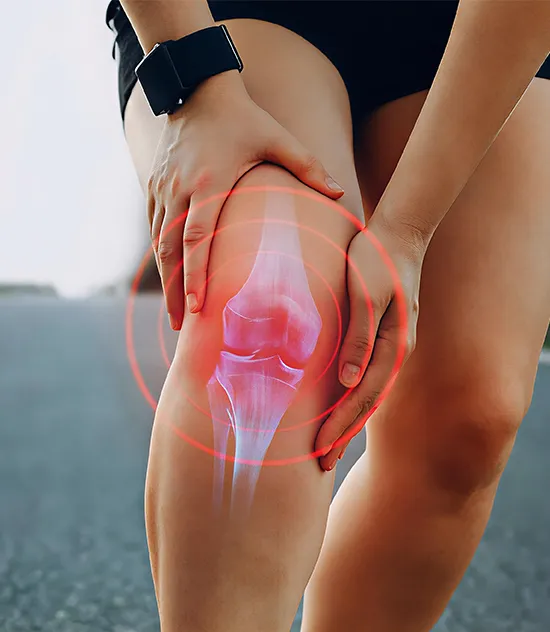
Experiencing leg pain or cramps? It could be Peripheral Artery Disease (PAD) or Knee Arthritis. Learn More




Every step seems to bring a reminder. Maybe it is a sharp ache on the outside of your hip when you climb stairs, or a deeper, stiffer pain that settles in after a long walk. Either way, it is easy to assume the cause is arthritis.
Hip pain is not automatically arthritis, though. Bursitis and osteoarthritis can both make walking uncomfortable, yet they affect different structures. Pain location, tenderness, stiffness, and triggering activities offer useful clues, but only a medical evaluation can confirm the source.
A bursa is a small, fluid-filled sac that cushions the space between bone and soft tissue, such as tendons and muscles. Bursitis means one of these sacs has become irritated or inflamed.
The trochanteric region, the bony point on the outer side of the hip, is a common source of outer hip pain. Causes may include repetitive movement, overuse, a direct bump or fall, prolonged pressure from lying on one side, or nearby tendon irritation.
Hip bursitis symptoms tend to center on the outer hip and often flare with certain positions or repetitive movement. They may include:
Hip arthritis usually involves the joint itself, so the pain often feels deeper. Common hip arthritis symptoms include:
The table below compares typical patterns. It is a general guide rather than a diagnostic tool.
Symptoms can overlap, and pain location alone cannot confirm a diagnosis. Someone with a classic outer hip ache may still have joint changes, and the reverse is true as well.
Hip bursitis vs. osteoarthritis is a common source of confusion because the two share several traits. Both may hurt during walking, and both can lead people to cut back on activity.
Pain can also spread into nearby areas, such as the thigh or buttock, which blurs the picture further. Some people may even have more than one source of hip pain at the same time. That is why the answer is not always an either/or choice.
Walking places repeated load on the hip and surrounding tissue, so several conditions can show up as hip pain when walking. Possible sources include:
Because so many structures overlap in this region, the type of pain, where it sits, and what triggers it all matter when narrowing down the cause.
Similar symptoms do not necessarily mean the same condition. A stretching routine that helps an irritated bursa, for example, may do little for a joint with cartilage changes.
Diagnosis helps avoid spending time treating the wrong source of pain. An evaluation usually includes a discussion of your symptoms, a physical exam of the hip, and sometimes imaging.
It is especially worth pursuing when hip pain is persistent or limiting mobility. Waiting for pain to become severe is not necessary, and an earlier answer often makes the next step clearer. For patients whose pain does trace back to the joint, learning about hip arthritis treatment options can help set expectations.
Bursitis and arthritis can feel alike, but they are not the same, and the difference shapes what helps. Pain location, tenderness, stiffness, and daily triggers offer clues, while an evaluation provides the answer.
If persistent hip pain is making walking or everyday activities difficult, identifying whether it comes from arthritis or another condition is an important first step.
North Atlanta Vascular Clinic evaluates patients with chronic hip arthritis pain at its Suwanee/Johns Creek, Alpharetta, Cumming, and Lawrenceville, Georgia locations and can discuss non-surgical treatment options when appropriate.
To get started, schedule an appointment.
Hip bursitis pain is most often felt on the outer side of the hip, and the area may be tender to the touch. It may also worsen when lying on that side.
Yes. Both are common causes of hip pain, and it is possible to have more than one source of discomfort, which is why an evaluation matters.
Groin or deeper hip pain is more characteristic of arthritis, while outer hip pain is more typical of bursitis. Symptoms can overlap, so location alone is not conclusive.
Stiffness and pain after inactivity are more characteristic of arthritis, though other conditions can cause it too. Pain that eases as you get moving is a useful detail to mention at an evaluation.
Consider an evaluation if the pain is persistent, keeps getting worse, disrupts sleep, or limits walking and daily activities.