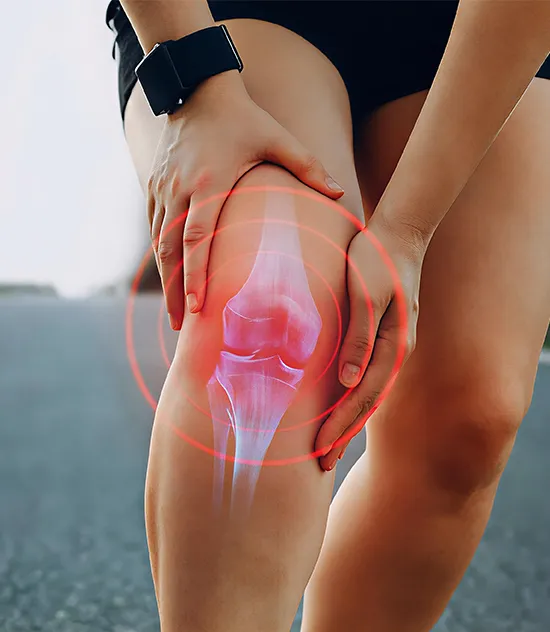
Experiencing leg pain or cramps? It could be Peripheral Artery Disease (PAD) or Knee Arthritis. Learn More




You lie down to sleep, and just as your body starts to settle, an unfamiliar, uncomfortable feeling creeps into your legs. Not quite pain, not quite numbness, but a pulling, crawling sensation that makes it almost impossible to stay still.
Getting up and walking around helps, at least for a little while. The moment you lie back down, it returns. This pattern, often described as restless legs at night, is more common than many people realize, and it can stem from several different causes, not simply "bad circulation."
Restless leg syndrome (RLS) follows a recognizable pattern. Uncomfortable sensations begin or worsen while the legs are at rest, typically in the evening or at night. An urge to move the legs follows, and movement or stretching brings temporary relief.
People describe the sensation in different ways, including:
Because RLS intensifies with stillness, symptoms often show up first in bed, while watching television, during long stretches of sitting, or on a flight or car ride. Sitting still doesn't cause RLS, but it does tend to trigger or intensify restless feet at night in people who already have the condition.
Several different factors are associated with restless leg syndrome, and more than one may be involved at once.
Many people develop restless leg syndrome without another condition explaining it, a pattern doctors call primary or idiopathic RLS. In these cases, family history and brain chemistry, particularly how the body uses dopamine, appear to play a role.
Low iron levels have a recognized association with RLS symptoms, since iron is involved in how the brain regulates movement signals. Depending on a patient's history and symptoms, blood testing may be considered to check iron levels.
Iron supplementation should only be started under a doctor's guidance. Taking iron without a documented deficiency can cause problems of its own.
Restless leg syndrome can occur or become more noticeable during pregnancy, particularly in the third trimester. Hormonal and iron-related changes are thought to contribute, and symptoms typically ease again after delivery.
Some chronic health conditions are associated with a higher likelihood of developing RLS, including kidney disease, peripheral neuropathy, and other conditions affecting the nerves or metabolism. Treating the underlying condition often helps ease the leg symptoms as well.
Some medications can contribute to or worsen RLS symptoms in certain people. Anyone who suspects a medication is affecting their legs should discuss it with their prescribing doctor rather than stopping it on their own.
Restless leg syndrome can run in families, especially when symptoms begin before age 40. A family history doesn't guarantee someone will develop RLS, but it does raise the likelihood.
Some people notice symptoms mainly in their feet rather than the entire leg, and understandably wonder if that changes the diagnosis. Location alone doesn't determine the answer.
The more useful clues are whether symptoms appear during rest, worsen in the evening or night, ease with movement, and come with a genuine urge to move. Restless feet at night that follow this pattern are usually still considered part of the same condition.
Because both can cause uncomfortable sensations at night, restless leg syndrome and circulation problems are often confused with each other. Looking closely at the pattern of symptoms usually makes the difference clear.
Symptoms can overlap, though. Not every uncomfortable nighttime leg sensation points to poor circulation, and not every case of poor circulation looks like classic RLS.
Vascular conditions can certainly produce symptoms that become more noticeable at night, so it's a fair question to ask. Poor circulation is not the same thing as restless leg syndrome, though the two are sometimes mistaken for each other.
In more advanced cases, PAD can cause rest pain, an aching or burning discomfort that appears even without activity. Vein disease tends to produce aching, heaviness, or swelling rather than an urge to move.
RLS, by contrast, has a distinctive pattern: a compelling urge to move paired with relief from movement, something that isn't typical of circulation-related pain.
A vascular evaluation is worth considering when restless legs at night happen frequently, disrupt sleep on a regular basis, or seem to be getting worse over time.
It's also worth scheduling one when the urge to move interferes with sitting still, or when symptoms occur alongside numbness, swelling, cold feet, skin changes, or leg pain during walking. If the cause simply isn't clear, an evaluation can help identify what's going on.
Restless legs at night aren't automatically a sign of poor circulation. The timing, sensations, movement response, and any accompanying symptoms all provide important clues about what's really going on.
Persistent nighttime leg symptoms deserve evaluation, especially when they interfere with sleep or appear alongside vascular warning signs. North Atlanta Vascular Clinic offers evaluation for restless leg syndrome and vascular conditions at its Suwanee/Johns Creek, Alpharetta, Cumming, and Lawrenceville, Georgia locations.
If you're unsure whether your symptoms point to a circulation problem or something else, schedule an appointment for an accurate diagnosis and a plan that fits your symptoms.
RLS follows a nighttime pattern because rest and inactivity intensify the underlying nerve signals involved in the condition. Symptoms often ease during activity and return once the legs are still again.
Most people describe an overwhelming need to shift, stretch, or walk, paired with sensations like crawling, pulling, or tingling. The discomfort typically isn't described as cramping or numbness.
Circulation problems can cause nighttime leg discomfort, but they don't typically cause the same urge-to-move pattern seen in RLS. Vein disease more often causes aching or heaviness, while PAD can cause cramping during activity.
RLS centers on an urge to move that's relieved by movement, while PAD typically causes pain triggered by walking that eases with rest, the opposite pattern. PAD can also cause coldness and slow-healing wounds not typical of RLS.
Yes. Location alone doesn't rule RLS in or out. What matters more is whether the pattern (rest-triggered, worse at night, relieved by movement) matches, regardless of whether it's felt in the feet or the full leg.
Consider an evaluation when symptoms are frequent, disrupt sleep, are getting worse, or appear alongside numbness, swelling, cold feet, or leg pain during walking.