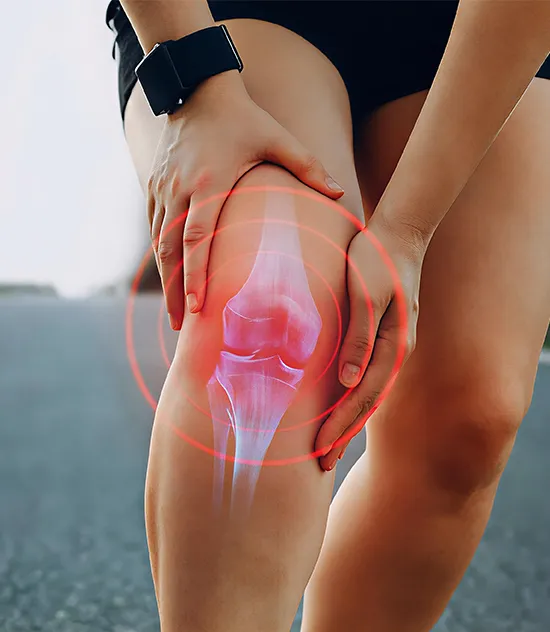
Experiencing leg pain or cramps? It could be Peripheral Artery Disease (PAD) or Knee Arthritis. Learn More




It usually starts small. A stiff hip when you stand up from the couch, a dull ache after a walk, or a twinge that turns putting on socks into a chore. Over time, stairs, exercise, and even sleep can start to feel harder.
Hip arthritis pain relief does not always begin in an operating room, though. Surgery is not automatically the first step, and many people manage symptoms with lifestyle changes, physical therapy, and physician-guided care. The seven approaches below show what that range can look like before hip replacement enters the conversation.
Hip arthritis commonly causes pain and stiffness that can gradually affect mobility. The discomfort does not always stay in the hip itself, which is one reason it is easy to mistake for something else.
Common patterns include:
The cushioning cartilage inside the hip joint can change over time. As it thins, the joint surfaces may rub together with more friction and become irritated, and the joint often feels stiffer.
These changes tend to build slowly, so symptoms may seem minor at first and become more noticeable gradually. That is often when people first mention it, once everyday tasks start to feel harder.
These seven approaches can be used alone or together, depending on your symptoms and health history.
Repetitive high-impact activities, such as running on hard surfaces or jumping, can aggravate a sore hip. Alternating demanding days with lower-impact movement often helps. Complete inactivity is not the answer either, since a hip that stays still tends to stiffen further.
Gentle mobility work, low-impact activities such as swimming or cycling, and strengthening the muscles that support the hip can all play a role. Because every hip is different, an individualized plan usually works better than a generic routine.
A physical therapist can assess mobility, strength, and gait mechanics, then teach strategies for everyday movement, such as rising from a chair or climbing stairs with less strain. Small adjustments like these can add up over weeks.
Where appropriate, weight management can reduce the load the hip carries with each step. Supportive footwear may help, and assistive devices such as a cane can offload the joint when a clinician recommends one.
Warmth from a heating pad or warm shower may feel soothing for morning stiffness. A cold pack may feel better after activity, when the hip is sore or irritated. Either offers short-term comfort rather than a lasting fix.
Over-the-counter medications may be considered for some patients. Whether they are suitable depends on health history and other medications, so it is worth checking with a doctor or pharmacist before using anything regularly.
When pain continues despite conservative measures, a physician may evaluate additional non-surgical options, from injections to minimally invasive procedures. Learning about treatment options for hip arthritis can help you know what to ask at an evaluation.
Self-care is a reasonable starting point, but it has limits. It may be time for an evaluation when:
No. Treatment depends on the severity of symptoms, functional limitations, overall health, and how the hip responds to conservative care.
Hip replacement may eventually be appropriate for some people, but it is not the only treatment pathway. Many people spend months or years managing symptoms with non-surgical options, and an evaluation can clarify where you stand.
Hip arthritis pain can be frustrating, but surgery is rarely the only answer. Activity changes, exercise, physical therapy, and short-term comfort measures all offer ways to ease symptoms, and understanding your options early gives you more say in what comes next.
North Atlanta Vascular Clinic evaluates patients with chronic hip arthritis pain at its Suwanee/Johns Creek, Alpharetta, Cumming, and Lawrenceville, Georgia locations.
If pain is limiting your mobility despite conservative care, schedule an appointment to learn which non-surgical options may fit.
Gentle, low-impact walking often helps keep the joint mobile, but long or fast walks on hard surfaces may aggravate pain. Pacing activity and resting between efforts usually works better than all-or-nothing.
Yes. Symptoms often vary with activity level, weather, and how long you have been sitting, so good days and bad days are common even though the condition itself is gradual.
Cartilage loss generally does not reverse. Treatment focuses on easing symptoms, protecting mobility, and slowing the strain on the joint where possible.
Primary care doctors, orthopedic specialists, and physical medicine physicians commonly evaluate hip pain. Vascular specialists may also evaluate patients whose pain persists despite conservative care and who want to explore minimally invasive options.
It varies widely. Some people manage symptoms for years with non-surgical care, while others find their pain and mobility limits change sooner, which is why periodic reassessment helps.