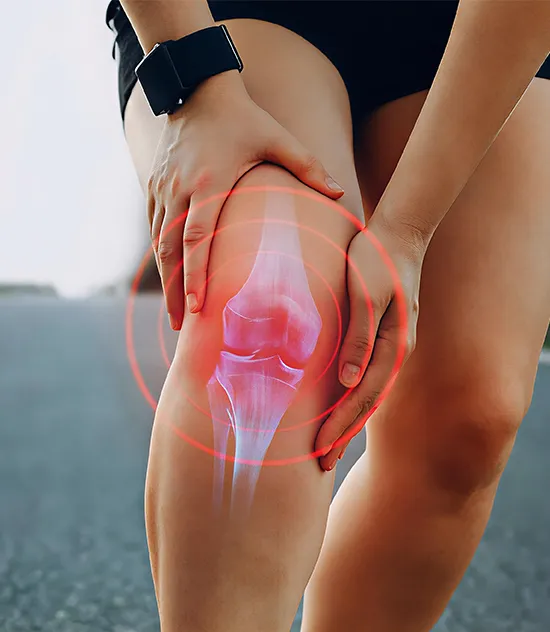
Experiencing leg pain or cramps? It could be Peripheral Artery Disease (PAD) or Knee Arthritis. Learn More




Warm weather can make your feet and ankles feel puffy, tight, or heavy, especially after a long day of standing, sitting, walking, or traveling. For many people, mild swelling in hot weather is temporary and improves with rest, hydration, and leg elevation.
However, swelling should not be ignored if it is painful, persistent, one-sided, or linked with skin changes. In some cases, hot weather may not be the main cause. It may simply make an underlying vein or circulation problem more noticeable.
Hot weather can cause the blood vessels to widen, a process called vasodilation. This helps the body release heat and regulate temperature.
When blood vessels expand, fluid can move more easily into surrounding tissues. Because gravity pulls fluid downward, swelling often appears in the feet, ankles, and lower legs.
Heat can also make it harder for the veins in the legs to return blood efficiently to the heart, especially after long periods of sitting or standing. This is why swelling may worsen after outdoor activities, long workdays, travel, or time spent on your feet.
For many people, heat-related swelling improves after cooling down, resting, walking, or elevating the legs.
Anyone can experience mild swelling during hot weather, but some people are more likely to notice it.
Risk factors may include:
People with vein problems may notice that swelling, heaviness, aching, or visible veins become worse when temperatures rise.
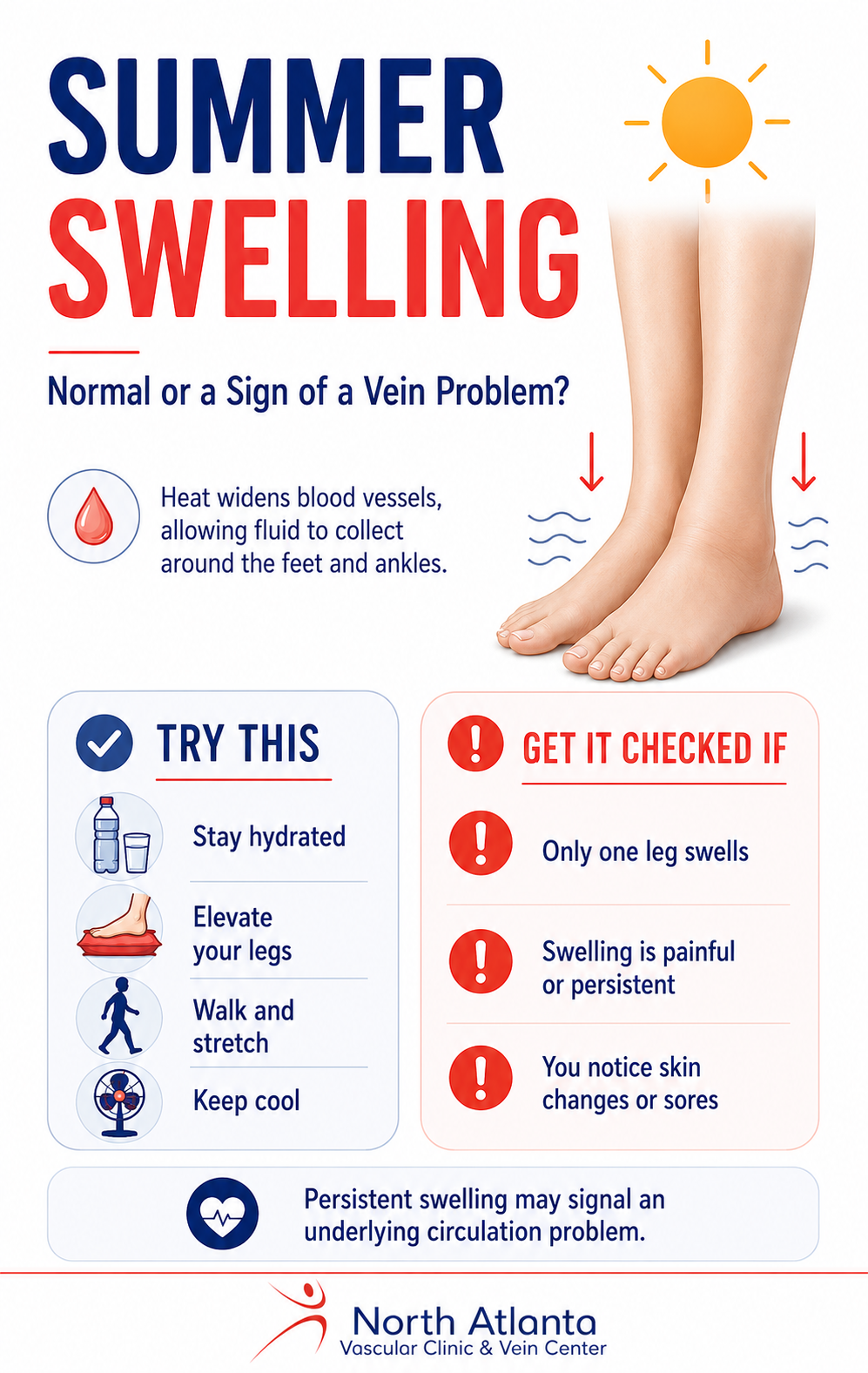
Mild heat-related swelling often affects both feet or ankles and may feel worse later in the day.
Common symptoms include:
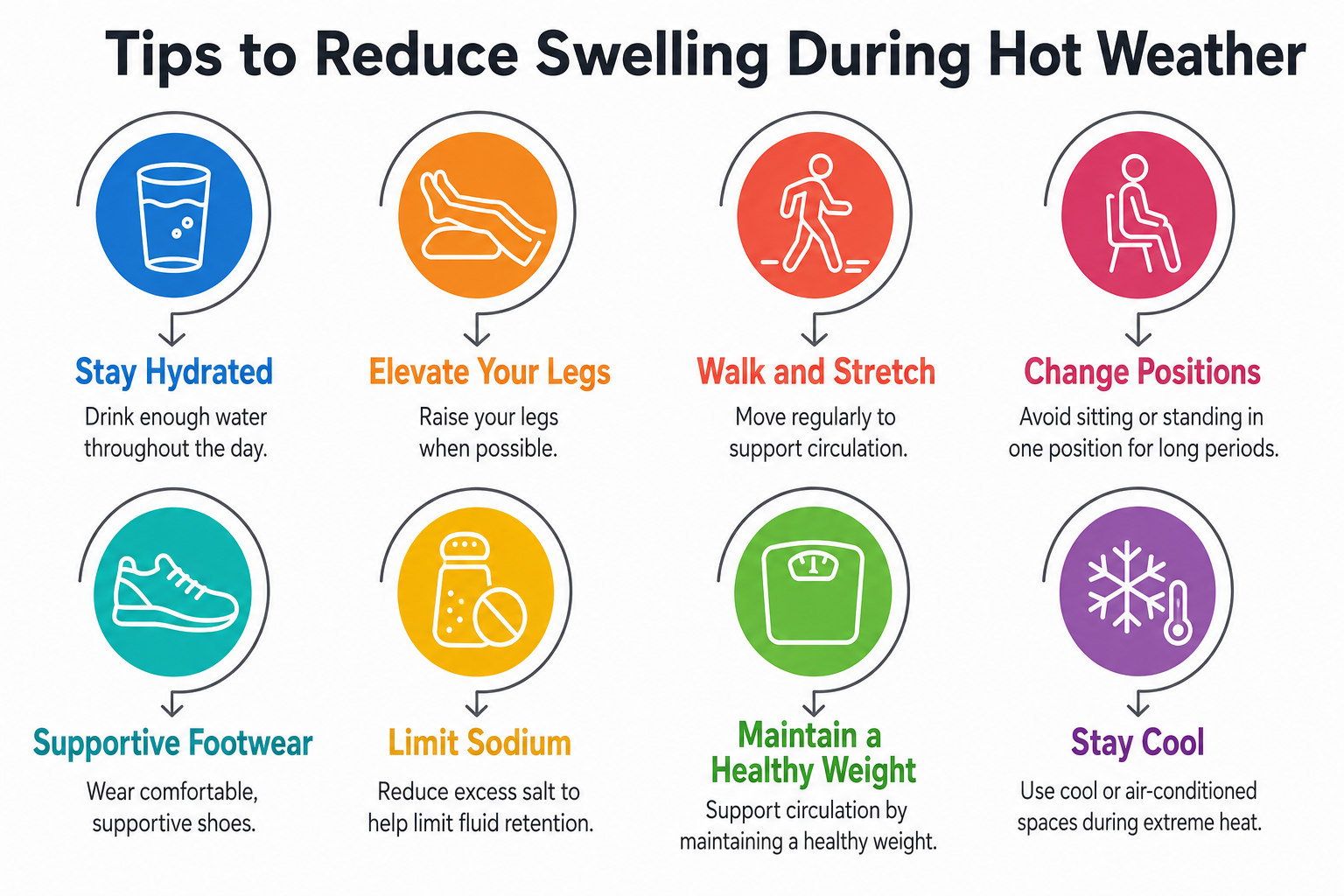
Simple habits may help reduce mild swelling and support circulation during warm weather.
Try to:
Hot weather may not be the root cause of swelling. Instead, it may make an existing vascular condition more noticeable.
One common cause is chronic venous insufficiency. This happens when the veins in the legs have trouble moving blood back toward the heart. Blood can pool in the lower legs, leading to swelling, heaviness, aching, skin changes, or visible varicose veins.
Varicose veins can also worsen in the heat. When veins are already enlarged or weakened, hot weather may increase discomfort, pressure, and swelling.
Lymphedema is another possible cause of persistent swelling. It occurs when lymph fluid does not drain properly, leading to ongoing swelling, usually in the arms or legs.
Peripheral artery disease, or PAD, is different from vein disease. It affects blood flow through the arteries and may cause leg pain while walking, coldness, numbness, or slow-healing wounds. PAD does not usually cause the same type of heat-related ankle swelling, but circulation symptoms should still be evaluated.
You should consider seeing a vascular specialist if leg swelling happens frequently, occurs even outside of summer, affects one leg more than the other, or interferes with daily activities.
A vascular evaluation may also be helpful if you have:
Mild swelling during hot weather is common and often temporary. However, swelling that is persistent, painful, one-sided, or associated with skin changes may point to an underlying vein or circulation problem.
If your feet, ankles, or legs swell often during summer, North Atlanta Vascular Clinic can help evaluate the cause and recommend appropriate treatment options. Schedule a consultation at one of our locations in Suwanee/Johns Creek, Cumming, Alpharetta, or Lawrenceville, GA.
Feet may swell more during the summer because heat causes blood vessels to expand. Long periods of standing, sitting, travel, or existing vein problems can make swelling worse.
Mild swelling in both feet or ankles during hot weather can be normal, especially if it improves overnight or with elevation. Persistent, painful, or one-sided swelling should be evaluated.
Yes. Vein problems such as chronic venous insufficiency or varicose veins may cause swelling, heaviness, and aching that becomes more noticeable in hot weather.
See a vascular specialist if swelling is frequent, persistent, one-sided, painful, associated with skin discoloration or wounds, or does not improve with rest and elevation.